
Which were India's first companies that still exist today? Many trace their origins to over a century back. These venerable organisations are business entities. But they chronicle the beginnings of Corporate India.

The story of the Bombay Stock Exchange and the people who shaped its growth: From wars and bomb blasts to speculators, reformers and wealth creators.

George Acland from Great Britain ran a coffee plantation in Sri Lanka and set up India's first jute mill in 1855. He raised capital and imported the machinery for the mill on the banks of the Hooghly in West Bengal. His company wasn't a great success, but his pioneering work paved the way for India to dominate the jute industry.

In the early part of 1800, a 30-acre plot next to Fort Gloster on the banks of river Hooghly in Howrah district of Bengal was the nerve centre of industrial activity; it housed India's first steam-powered cotton mill, Bowreah Mills, which was set up by a British merchant and went on to become a hub of factories - a rum distillery, foundry, cotton yarn factory, an oil mill and a paper mill, et al. Spearheaded by Dwarkanath Tagore, the industrialist grandfather of Rabindranath Tagore, the commercial complex was possibly the first of its kind in the country. Close to 200 years later, after much ebb and flow of history, the hub is set for a resurgence of sorts.

Builders in the city must engage only the vehicles fitted with a tracking system for the transportation of construction materials, the guidelines said.
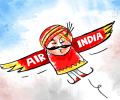
With the new owner shelling out Rs 18,000 crore for the buyout of 'Maharaja' this would be the highest ever amount garnered through privatisation or even the cumulative sum garnered through strategic sale in 1999-00 to 2003-04. The government had garnered roughly over Rs 5,000 crore during that five-year period by privatising 10 CPSEs.

After a hiatus of nearly two decades, the government's programme to privatise state-owned firms restarted with the handing over of debt-laden national carrier Air India to the Tata Group. With the new owner shelling out Rs 18,000 crore for the buyout of the 'Maharaja', this would be the highest-ever amount garnered through privatisation, and is even more than the cumulative sum mopped up through strategic sales from 1999-00 to 2003-04. The government had in October last year inked the share purchase agreement with the Tata Group for sale of national carrier Air India for Rs 18,000 crore. Tatas would pay Rs 2,700 crore cash and take over Rs 15,300 crore of the airline's debt.

With the first salary date after demonetisation around the corner, will India's labourers be able to take their hard-earned wages home?

In all, 25 Chairman-cum-Managing Director (CMD) posts, 8 MD posts and 2 Chairman posts are lying vacant, according to a written reply by Minister of State for Heavy Industries and Public Enterprises P Radhakrishnan in the Lok Sabha.
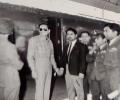
''I heard from the Pakistani brigadier that Flying Officer Pradeep Apte had been killed after he ejected safely and tried to escape. This news sent a chill up my spine. I had been lucky so far...'

India Inc has few leaders who are likely to grab headlines in 2015.

The recent improvement in consumer sentiment is almost entirely a rural India story. Much of the corporate sector reposes faith in rural India to fuel its growth, observes Mahesh Vyas.
The fierce litigious fight for little-known Birla Corporation marked the first major controversy for this storied and reserved business family.
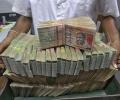
The list is of companies declared sick as on March 31, 2014.

In total, the Centre plans to purchase around 40.7 million tonnes of wheat from farmers this year, which is almost 19 per cent more than last year.

The state needs great numbers of new-generation entrepreneurs.

10 central trade unions have called a nationwide shutdown against 'anti-worker policies' of the central government. Apart from being successful in Bengal, Kerala and NE states, the bandh has also got support from Cong leader Rahul Gandhi and Shiv Sena in Maharashtra.
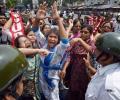
Ten trade unions with a combined membership of 15 crore workers in public and private sector, including banks and insurance companies, are on a nationwide strike to protest against changes in the labour laws.
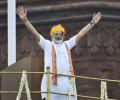
Following is the full text of Prime Minister Narendra Modi's address from the ramparts of the Red Fort on the 73rd Independence Day.
 © 2026 Rediff.com - Advertise with us - Disclaimer - Privacy Policy - Sitemap - Feedback - About us - Terms of use - Grievances